Consistent Solventless Hash
Craft Quality & Commercial Scale

Bag Free Ice Free Tedious Labour Free Guesswork Free
I'm an Operator

You're running runs. You know the labour, the bags, the blunt force. See what a fixed-condition system changes at the floor level.

I'm an Investor

One architecture. Three machine tiers. A market running on a workaround that hasn't been replaced — until now.

I'm a Business Owner

You need predictable output, manageable overhead, and product your customers trust. Clean medicine at any scale — that's the brief.

Not Washed Refined
Abzu's Refinery — stainless steel commercial unit, future vision render
SS Future Vision — Image Coming
Abzu Commercial, Future Vision
Cold-Water Trichome Refinery
The Problem

Why the Industry's Most Trusted Process
Is Its Biggest Liability.

Every run is a negotiation with ever-changing conditions. Ice melts, ratios shift, separation dynamics drift. The problem is architectural — not procedural. Better technique cannot fix a broken foundation.

Filter By
Content View Click any row below to expand & read more
01
Quality of Product For the customer — what ends up in the extract
1 problem area  ·  3 failure points
01
Trichome Damage Blunt force trauma — ice physically ruptures the structures it's meant to preserve
  • 1 Blunt force trauma
    Ice is a battering instrument, not a separation tool. It strikes rather than releases. The entire separation paradigm is brute force, not precision — and the product bears the cost.
  • 2 Trichome heads rupture
    Force exceeds the precise threshold needed for clean detachment. Trichomes are destroyed before they’re ever collected. You lose the most valuable part of the plant at the moment of separation.
  • 3 Green biomass contamination
    Blunt force breaks plant material alongside trichomes. Less of the valuable thing, more of the contaminant. The yield carries green matter that degrades grade and requires downstream remediation.
02
Operator Challenges On the floor — what operator deal with every single run
2 problem areas  ·  7 failure points
02
Conventional Bag Workarounds Conventional ice-water processing is built on a retrofit — the industry standard is a workaround
  • 4 Ice water bag workarounds are a retrofit, not a solution
    Craft equipment designed for a different application, adapted. They sort by micron as a proxy for grade — not a first-principles separation mechanism. The industry built its standard on a workaround, and the ceiling has been there ever since.
  • 5 Bag labour
    Lifting, draining, re-stacking, replenishment on every wash. Heavy, repetitive, manual work. Labour does not reduce as you scale — it grows with every additional machine.
  • 6 Plastic contamination in the product
    Degrading bag material sheds microplastic fibres into the process water. In a market built on purity, this is product integrity failure nobody is naming — and in a medical context, it is a contamination vector that cannot be ignored.
  • 7 Bags break under mechanical stress
    Holes form, grade separation fails, material crosses between micron categories. A quality failure point built into the method — heavy, wet material under repeated agitation.
04
Touch & Loss Every touch costs you — the method is its own enemy
  • 11 Every touch costs you
    One touch to dry in a closed system. Traditional: multiple transfers, multiple drains, multiple handling events. Each one costs trichomes you never get back. The method is its own enemy.
  • 12 Less touching = more yield
    Trichome residue on vessels, lifting equipment, draining surfaces. Each contact point is a loss event. The more steps in the process, the more you leave behind — permanently.
  • 13 Documented yield loss — ~80% vs 90-plus%
    Traditional methods recover approximately 80% due to handling loss. Closed system: 90-plus%. That 10-plus point gap is the measurable cost of the process itself — not genetics, not operator skill. It is built into the method.
03
Labour Costs & Effectiveness At scale — why costs don't compress and efficiency doesn't compound
2 problem areas  ·  8 failure points
03
Labour & Scale Horizontal scaling only — more machines, more operators, more guesswork. No leverage.
  • 8 Horizontal scaling only — no operational leverage
    More output means more machines, more people. Cost per gram never improves. You are buying volume, not efficiency. There is no compounding return on scale.
  • 9 Multiple operators required per machine
    2–4 hour runs, constant attention, proportional headcount as volume grows. You cannot remove the human cost — it is structural to the method.
  • 10 Low throughput — the process limits itself
    Constrained by ice melt time, manual changeover, and handling between runs. The ceiling is baked in. It cannot be engineered away within the conventional framework.
06
Operational Cost Ice is an ongoing consumable cost — it scales with every batch and never disappears
  • 20 Ice is an ongoing consumable cost
    Make, purchase, handle, and dispose of on every run. A recurring overhead that never disappears — it scales with every batch and compounds with every facility expansion.
  • 21 Water waste — 3 to 4× the volume required
    Approximately 70% excess water consumption embedded into the method at every scale. Water cost, treatment cost, and disposal cost — all inflated as a structural feature of the process.
  • 22 Ice requires storage infrastructure
    Freezer space, cold chain, logistics planning before a single run begins. A capital and operational dependency embedded into the facility that operators often don't fully account for.
  • 23 Ice logistics — supply dependency
    Sourcing, transport, handling built into every production day. What happens when supply fails? You don't run. The operation depends on a supply chain for a consumable input.
  • 24 Ice machines contaminate the water
    As ice machines age they leach heavy metals into the water. That water contacts the product directly. A contamination vector that nobody in the industry is naming — and a medical-grade concern for any producer on a pharmaceutical pathway.
04
Process Efficiency Systemic — why the process cannot be standardised or made repeatable
2 problem areas  ·  8 failure points
05
Process Instability Separation dynamics change mid-run — the process is never the same twice within a single batch
  • 14 Separation dynamics change mid-run
    What worked at minute one is doing something different at minute thirty. The character of agitation shifts as ice volume decreases. The process is never the same twice within a single run.
  • 15 Water-to-biomass ratio drift
    Melting ice adds water volume throughout the run. The ratio you set at the start is not the ratio you finish with. Everything downstream — concentration, separation efficiency, grade distribution — is affected.
  • 16 Melt rate is uncontrollable
    Depends on ambient temperature, ice chunk size, hard or soft freeze, surface area, water temperature, batch volume. None of these are standardised. Every run has a different melt curve, even with the same operator and same inputs.
  • 17 Thermal drift
    As ice melts the water does warm somewhat — but the ice bath is partly self-buffering, so temperature stays fairly stable. Thermal drift is real but minor. The larger cost is mechanical: as the ice melts and loses mass, the separation dynamics it drives shift continuously through the run.
  • 18 Must wait for ice to melt fully
    You cannot collect early without losing trichomes still suspended in the melt. The method dictates your timeline. The process constrains itself and limits throughput from the inside.
  • 19 The Brute Force Cascading Compensation Loop
    Temperature rises → operator adds water → ratio changes → agitation changes → operator compensates again. New variables compound on old ones. You are no longer running a process. You are reacting to one. Every adjustment introduces a new variable you have to manage.
07
Sustainability ESG and carbon implications — positioning risk that is current, not distant
  • 25 ESG and carbon credit implications
    European markets are moving toward clean-label, low-carbon production as a commercial and regulatory expectation. This is not distant — it is current positioning risk for any producer still running conventional ice-water processing.
  • 26 Carbon footprint of ice production
    Manufacturing ice is energy-intensive. For operators tracking carbon this is an embedded and growing liability in every production run — a cost that compounds with scale and tightening regulation.
The Abzu Advantage See What Replaces It.

The best ice-water systems are an excellent execution of the wrong architecture. Not a better wash. Not a larger drum. Not more ice. A different architecture — built on what cold water already knows how to do, engineered to do it consistently, at any scale.

The Solution

No Ice. No Bags. No Guesswork.
No Workarounds.

Abzu's Refinery uses controlled dynamic flow to do what ice was always trying — and failing — to do. The result is not incremental improvement. It is architectural replacement.

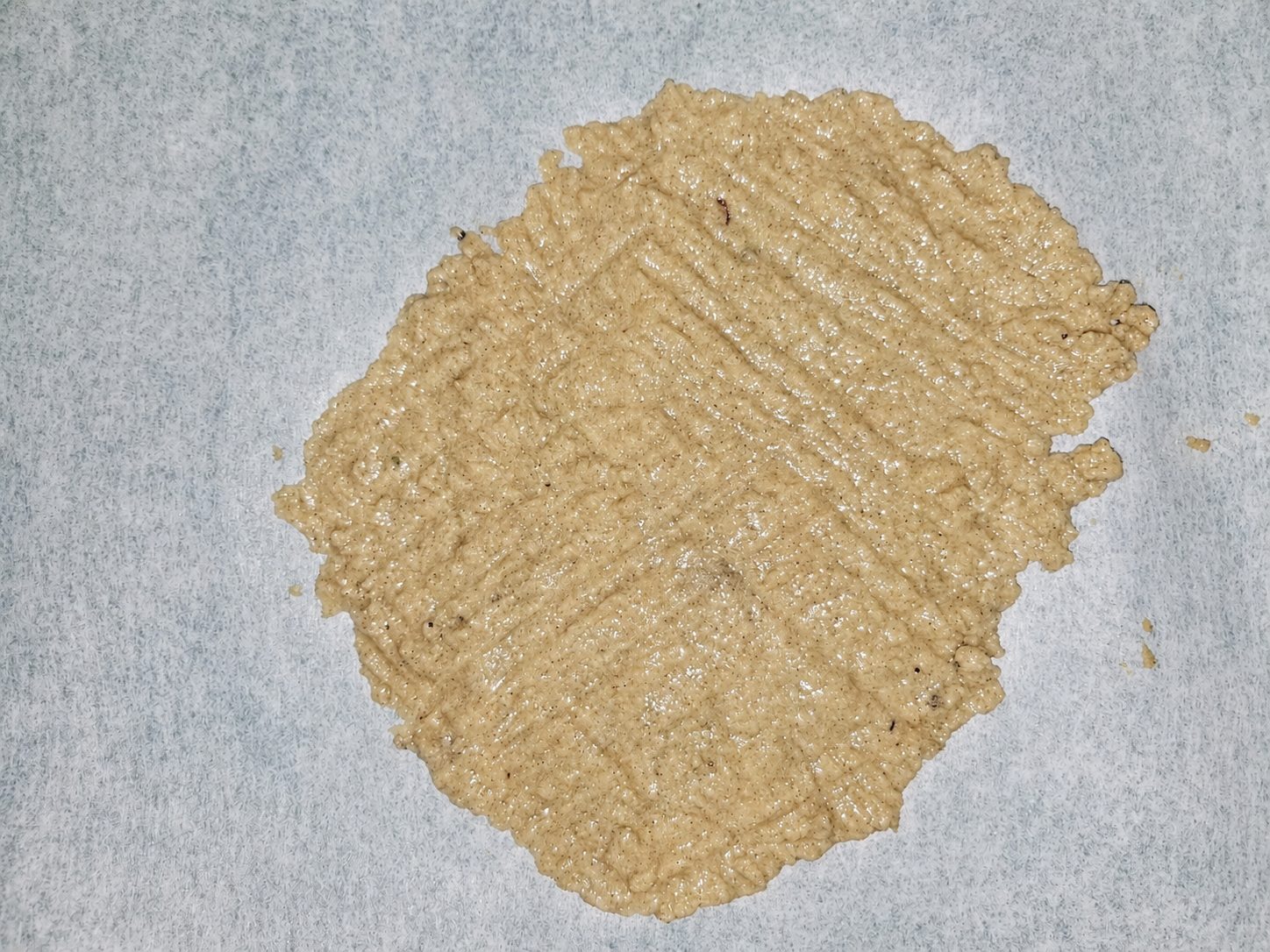
Blonde grade hash output — high-purity trichome separation
Blonde Grade — Image Coming
Enthusiast  ·  Connoisseur Tier
Full Spectrum
One Run, One Hour
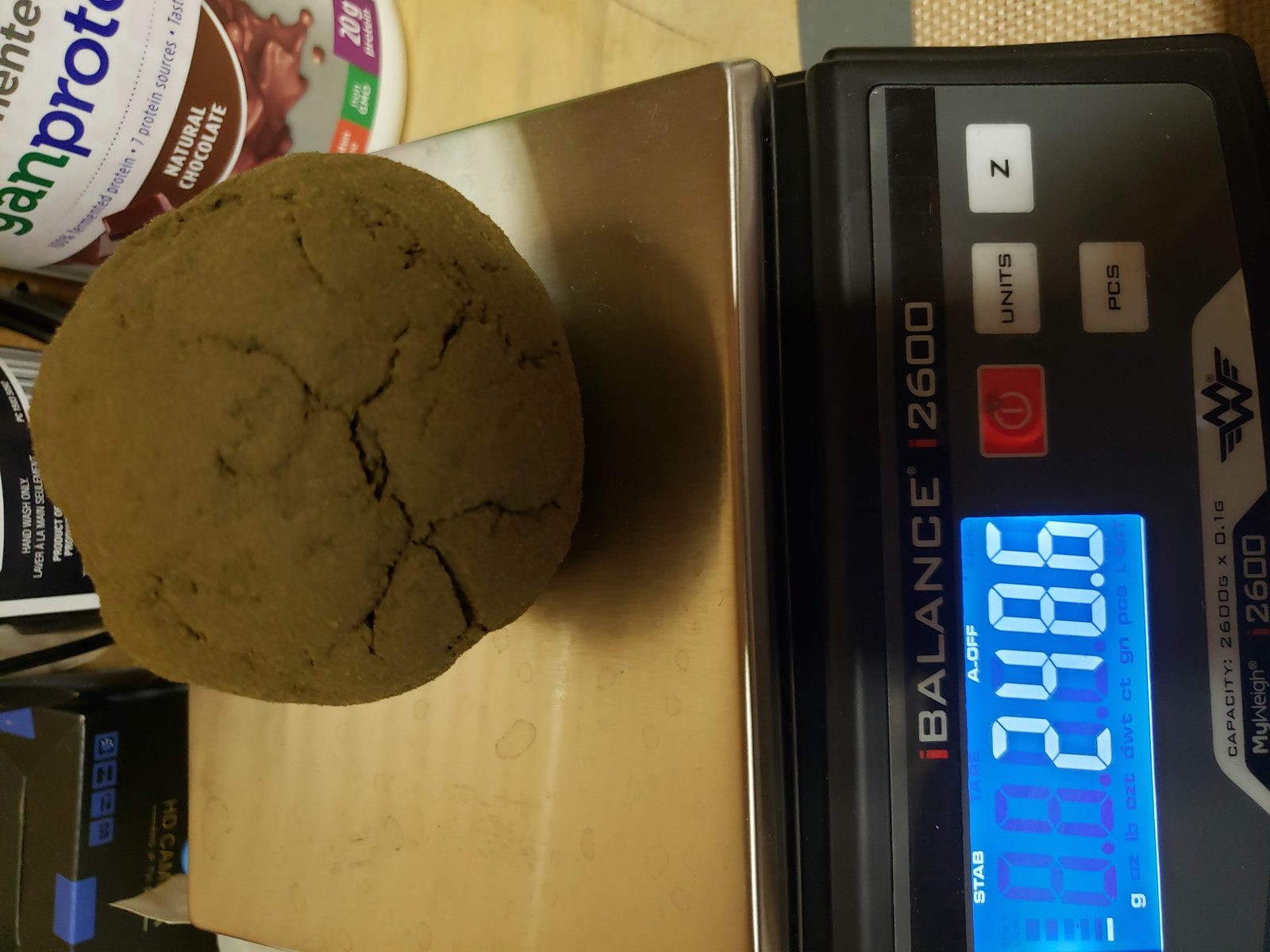
Gold grade hash output — pressed dry-sift puck
Gold Grade — Image Coming
Commercial Grade  ·  70% Dry
Tedious Labour Free
One Run, One Hour
Multi-grade output grid — 190u, 160u, 73u, 25u micron separation from a single batch
Micron Grade Grid — Image Coming
Various Grades
You can see when you're done
Guesswork Free
One Run, One Hour
The Force of the Enlil Approach VS the Finesse of the Enki Approach The ancient world named two ways of engaging with the natural world. One of them built the ice-water processing industry.

Enlil — storm god, wind, command. The Enlil approach compels. It applies force until the outcome submits. Conventional ice-water processing is the Enlil approach: arrest the plant in ice, batter it into yielding its trichomes, strain the result through filters. Force applied until separation happens.

When results from that method fell short, the industry's answer was more Enlil. Bigger wash vessels. Clunkier iron. Heavier agitation motors. Larger batch loads pushed through the same broken architecture. And alongside the hardware — marketing language that reframed the ceiling of a flawed process as a virtue: artisan wash counts, hand-crafted consistency, small-batch superiority. Best-case-scenario numbers presented as standard results. None of it was the Enki approach. None of it changed the architecture of the problem. It dressed the same blunt instrument in better copy.

Enki — water, wisdom, craft. The Enki approach works with natural law rather than against it. It understands the properties of the medium and engineers the conditions that allow the desired outcome to occur — not through force, but through calibration.

Abzu's Refinery is the Enki approach. Controlled dynamic flow creates the conditions in which trichomes release and separate on their own terms — by mass, by gravity, by the natural properties of water at temperature. Abzu does not force the separation. It enables it. That distinction is not philosophy. It is engineering — and it is what produces consistent, graded, intact trichome output on every run.

How It Works Trichomes release and settle naturally — the heaviest, most intact heads first. The machine calibrates the conditions. The process does the rest.

Controlled dynamic flow creates the thermal and kinetic conditions for trichome separation without impact trauma. The separation tank holds a stable thermal environment throughout the run — not managed by operator attention, but maintained by the system itself.

The result is grade-separated, integrity-preserved trichome output on every run. Clean medicine at home and at commercial scale — produced by the same architecture, governed by natural law.

What You Get Documented results. Repeatable runs. Multiple grades from one batch. Clean medicine at any scale.

Consistent separation across every run. One operator running multiple machines simultaneously. Multi-grade output from a single input batch — from connoisseur single-source premium to full-spectrum commercial material.

Without intensive manual labour. The lifting, draining, re-icing, bag-stacking, and hand-management that defines a conventional wash cycle does not exist in this process. One operator runs multiple machines simultaneously — not because they are more skilled, but because the system holds the conditions so they do not have to. No ice to purchase, store, or dispose of. No conventional bag workarounds to lift, drain, replace, or monitor for integrity failure. No compensation loop to manage when the process drifts mid-run — because the process does not drift.

A medical-grade configuration meets pharmaceutical production standards. The same architecture serves a home cultivator and a licensed producer. The numbers documented from actual Abzu operation — not modelled, not benchmarked — are available in the next section.

The Category

Mechanical Trichome Refinement.
A Category That Did Not Exist Before This Machine.

The first refinery in solventless cannabis. Originating a layer that was never built before — not improving the one that was.

Creator vs Disruptor: What the Distinction Actually Means A disruptor improves what already exists. A creator brings into being what did not. The oil refinery did not compete with kerosene merchants — it made the comparison irrelevant.

A disruptor improves what already exists. A creator brings into being what did not. Uber disrupted taxis. The oil refinery did not disrupt kerosene merchants — it made them obsolete by inventing the distillation column that turned crude oil into kerosene, lubricants, gasoline, and chemical feedstock as separable streams. There was no refinery before 1859. After it, there was an industry.

Cannabis has had cultivation, processing laboratories, and bag-and-bucket operators. Cannabis has not had a refinery layer. That layer is where margin structure is set, quality grades are defined, and downstream contract economics become possible. Until that layer exists, the segment cannot enter the medical, pharmaceutical, and white-label channels its chemistry deserves.

Abzu's Refinery occupies that missing layer. It accepts biomass and resolves it, mechanically, into full-spectrum or grade trichomes. The architecture was not adapted from washing equipment or pulp-vortex separators. It was designed from the trichome outward. That is the difference between competing inside an existing category and originating a new one.

The Three Phases of Industry Maturity Every industry moves through the same arc — from craft to adaptation to purpose-built architecture. Cannabis processing has been stuck in Phase 2. Until now.
Every industry matures through three phases
Phase 1 Artisan

Hand tools. Body heat. Intuition.

Charas-rolling, hand-sieving, single-batch craft.

Quality is a function of the operator, not the system.

Output is irreproducible by design.

Phase 2 Adaptation

Repurposed equipment. Ice. Fabric bags.

Better ice-water-bag workarounds, scaled and bolted onto bigger washing-machine ice agitation.

Quality is compensation, not specification.

Scale is attempted, never achieved.

Phase 3 Industrial
Architecture

Purpose-built systems. First principles.

Mechanical separation engineered for the trichome itself.

Quality is a controlled variable, not a hope.

Scale is the design intent, not an aspiration.

Abzu's Refinery is Phase 3.
The Refinement Era What it means for the industry when a machine originates a layer that did not exist — and what becomes possible on the other side of that threshold.

The oil refinery did not improve whale oil. It changed the economics of an entire civilisation by creating a layer of industrial chemistry that had not existed before. The distillation column is still running. The whale oil market is not.

Mechanical Trichome Refinement is that layer for cannabis. When the separation is mechanical, controlled, and repeatable — grade structures become contractable. Pharmaceutical and white-label channels become accessible. The margin structure of the segment changes permanently. Not because the old process got better. Because a new architecture replaced the need for it.

Not disruption. Creation. The refinement era begins here.
Technology

Built From First Principles.
Built For Result.

Built on the mathematics of how water actually moves, what the trichomes need to gently separate — not how the industry assumed it did.

Abzu's Refinery  ·  Current State

The proof is in. The machine is built. The testing is done. The next step is commercialization.

The Tech Is on the Inside

From everything I have observed — the proof is here. The Abzu purpose built separation chamber is here. The technology lives on the inside.

Abzu's Refinery — current working prototype, full machine on frame with control panel
Prototype — Separation Vessel · Photo Coming
Abzu's Refinery — current working prototype, separation vessel close-up
Prototype — Full Assembly · Photo Coming

The Current Refinery

  • Working prototype built to scale
  • Every part built to exact specification
  • Creating a purpose built separation chamber
  • The Tech is on the inside
  • Natural forces acting naturally, predictable natural law
  • This is what I observed
  • This is what I adjusted for
  • This is what I found to work
  • This is what I tested
  • Separation dynamics is here
  • Here is the proof
  • Abzu Cold Water Trichome Refinery.
Abzu Lab Design  ·  What Comes Next
Abzu's Refinery — stainless steel frame and tank assembly, commercial unit
SS Frame & Tank — Image Coming
Stainless Steel Frame & Tank
  • Lab
  • Medical Cannabis Producers
  • Seed to Sale
  • Traditional Healers & Practitioners
The Architecture What the trichomes need — answered from physical first principles.

Abzu's Refinery was designed from physical first principles, developed since 2022 as a separate invention. The architecture specifies its operating point by three physically distinct ratios rather than a single drifting figure. The Separation Chamber Ratio (SCR) — water in direct contact with biomass inside the basket, divided by biomass mass — operates at 10:1. The System Water Ratio (SWR) — total water in the closed vessel divided by biomass mass — sits at approximately 25:1 at the SCR 10:1 operating point. The Cumulative Wash Throughput Ratio (CWTR) — total water passing through the biomass across the cycle, divided by biomass mass — runs at approximately 70:1. The three ratios stay constant across every Abzu tier because the architecture scales geometrically. Conventional ice-water processing operates at a single drifting active ratio in the 3-to-10:1 range with no formal definition, and lets it drift as ice melts. Abzu's three ratios are not operational preferences. They are what the physics of clean separation requires.

The design did not start from the legacy washer and work toward refinement. It started from the trichome itself — a stalked, fragile, oil-filled gland — and asked what conditions would let it release intact, without impact, without ice, without bag stacks. The Refinery is what those constraints produced. The numbers reported here are from documented operational runs on the resulting machine. Not laboratory projections, not modelled estimates, not best-case-scenario marketing ranges.

That distinction matters. The numbers come from the Refinery running on real material — and they carry the weight of the physics, not the weight of a personal history.

The Science Controlled dynamic flow. Natural separation. Thermal precision at every scale.

The physics of trichome separation are well-understood: trichomes separate from plant material when the mechanical bond is disrupted at the correct temperature and the surrounding medium allows them to move freely. What has never been engineered — until now — is the controlled environment that allows this to happen consistently, without the ratio drift and mechanical trauma of conventional processing.

Abzu's Refinery engineers that environment. Controlled dynamic flow is calibrated, not approximated. The thermal range is held — not managed by operator attention or compensated with consumable inputs. The working tank maintains the conditions required for separation throughout the run, not just at the start of it.

The result is a process with a fixed input-output relationship: same conditions, same material, same output. That is what repeatability means in practice. It is what medical-grade production requires — and what no conventional approach to cold water processing has previously been able to provide.

The IP Position The method is documented, protected, and defensible.

The architecture of Abzu's Refinery is the subject of active intellectual property work — proprietary methodology, confidential disclosure controls.

What is protected is not a component — it is a method: the specific combination of controlled dynamic flow, thermal conditions, and collection geometry that produces consistent, grade-separable trichome output without ice, without conventional bag workarounds, and without operator guesswork.

The method cannot be replicated by adapting existing wash vessel designs. The protection covers the approach — the calibrated environment in which separation occurs — not a single mechanical element that could be designed around. That is a defensible position, and it is the foundation of the competitive moat.

The Numbers

The Numbers Come From the Machine.
Not a Model.

Documented from actual operation. Not projections. Not benchmarks. Real runs, real material, real output.

10%

Demonstrated yield on cured trim

Demonstrated repeatedly across years of testing · supporting band 22–55 g/lb
~60%

Labour reduction vs conventional ice-water processing at equivalent output

Based on operator-per-machine comparison
~75%

Less water consumed per batch vs conventional processing

Structural reduction — not process optimisation
Yield Output Range 22–55 g/lb from cured trim. 45–113 g/lb from fresh frozen. Ranges that reflect real material variability — not inflated projections.
Material Output Range Yield %
Cured / Dried Trim 22–55 g per lb 4.85% – 12.12%
Fresh Frozen 45–113 g per lb 9.92% – 24.91%

The floor reflects suboptimal input material. The ceiling requires high-potency cultivar selection and consistent operator protocol. Fresh frozen figures are documented separately — they reflect a different material state and should not be cited interchangeably with cured trim ranges.

Operator Efficiency One operator. Multiple machines. Output that compounds without headcount that compounds with it.
1 operator / 1 machine 5–6 runs per 8-hour shift
1 operator / 2 machines 5 runs per machine (10 total)
Conventional ice-water processing (comparable output) 2–3 operators required
Labour reduction vs conventional ~60% fewer operators
Ice purchasing None
Conventional bag handling & replenishment None
Supply chain dependency for a consumable input Eliminated
Products

Five Tiers. One Architecture.
Pick the One That Fits.

The same separation dynamics at every scale — from the home counter unit through to the 200-litre LP production tank. Click a tier to see what it does.

Our Story

Abzu Is the Sumerian Word for the Primordial Freshwater Abyss.

The domain of Enki — the principle of water, wisdom, and appropriate craft. The machine is named for what water already knows.

The Origin The ancient world understood water as intelligent — not metaphorically, but practically.

Abzu (Sumerian) and āpas (Sanskrit/Vedic) are a cognate pair naming the same cosmological concept across five thousand years: the primordial freshwater intelligence, the discriminating medium that separates the pure from the impure. Not metaphor. Observation — rendered as mythology because that was the available language.

The Vedic tradition documented soma preparation using cold water, mesh filtration, and staged refinement — the oldest recorded trichome processing protocol in human history. That protocol understood what the modern processing industry forgot: the medium is intelligent. The task of the engineer is not to force an outcome but to calibrate the conditions that allow the outcome to occur.

The logo carries आपस् in Devanagari above ABZU in Latin — both names, one concept. Five thousand years of the same understanding, now engineered at commercial scale.

"Six doctors prescribed big pharma procedures and drugs. One prescribed cannabis. That is where Abzu began."
Greg van der Linde — Inventor & Founder, Polar Natural Processing
Meet the Inventor

Greg van der Linde

Inventor  ·  Founder  ·  Polar Natural Processing

The origin of Abzu's Refinery is a personal one. Six doctors prescribed pharmaceutical solutions. One prescribed cannabis. What followed was not just a change in treatment — it was a confrontation with the processing methods the industry had normalised, and why they were failing the medicine they were meant to deliver.

Greg brought a background in Lean production, Six Sigma, and corporate operations to a problem the processing industry had never treated as an engineering problem. Built from physical first principles since 2022 as a separate invention, Abzu's Refinery is the architecture those principles produced. Built in Western Canada. Built from the physics up.

LinkedIn ▶
The Journey Six doctors prescribed big pharma. One prescribed cannabis. That is where Abzu began.

The origin was personal. The discovery was architectural.

What followed the founding moment was the recognition that the compound producing healing was being damaged by the processing methods the industry had normalised. Ice. Mechanical agitation. Brute force. Methods that destroy what they're meant to deliver — and nobody had stopped to ask why.

Coming from a background in corporate operations, Lean production, and Six Sigma — the discipline of doing more with less, eliminating waste, and building systems that work the same way every time — the problems with conventional ice-water processing were immediately legible. The process was labour-intensive, inconsistent, and operator-dependent. There was no leverage. Every run was a negotiation, not a system. That is not a production method. That is controlled improvisation — and it was the only way anyone was doing it.

That recognition started the design process. Not to refine the existing method, but to understand what was actually happening in the water — and engineer the conditions that would allow the correct outcome to occur without force, without guesswork, and without the operator being the variable that determined quality.

That recognition led to first-principles reconstruction. Not optimisation. The question was never "how do we do this better?" It was "what is the correct way to do this at all?"

Abzu's Refinery answers that question. Built from the physics up, not from the industry down — developed since 2022 as a separate invention, not a continuation of any earlier project.

Polar Natural Processing The company behind the machine — built on the same principle: work with natural law, not against it.

Polar Natural Processing is the developer of Abzu's Refinery. Based in Western Canada. The Refinery is built, operational, and producing documented output. The company operates on the same philosophy as Abzu: no shortcuts, no workarounds, no compromises on output quality.

🍁 Designed & Built in Canada

The next stage is building the first commercial unit — and that is where strategic capital is being sought. Not to finish the science. The science is done, the Refinery is real, and the documentation is from actual operational runs. What follows is commercialisation — and the window before that happens is the window to be positioned inside it.

Strategic Capital  ·  The Investment Window

The First Machine of Its Kind
Is Entering the Market.

Be positioned before the announcement.

Stay Connected

Received.

We'll be in touch. You're positioned before the announcement.

Why now